

Catholic Social Teaching
As a Catholic School our aim is to make sure that every single student is given the opportunity to learn and grow into the version of them God has called them to be. Practically the best way to do this is through teaching Catholic Social Teaching or CST for short.
CST has 7 Core Principles each of the core principles help Catholics to interpret the Bible and use its teaching in modern Society. Look below at the 7 Principles and see how our school demonstrates these principles in our daily functioning.
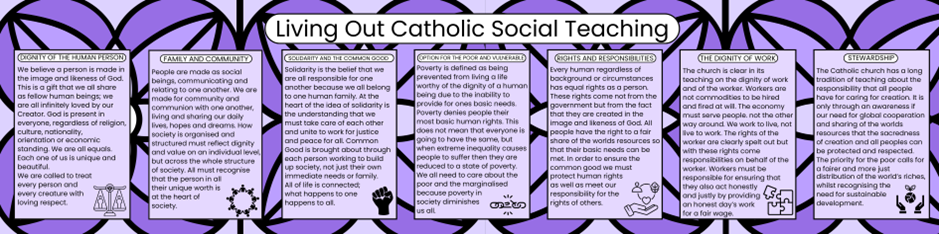
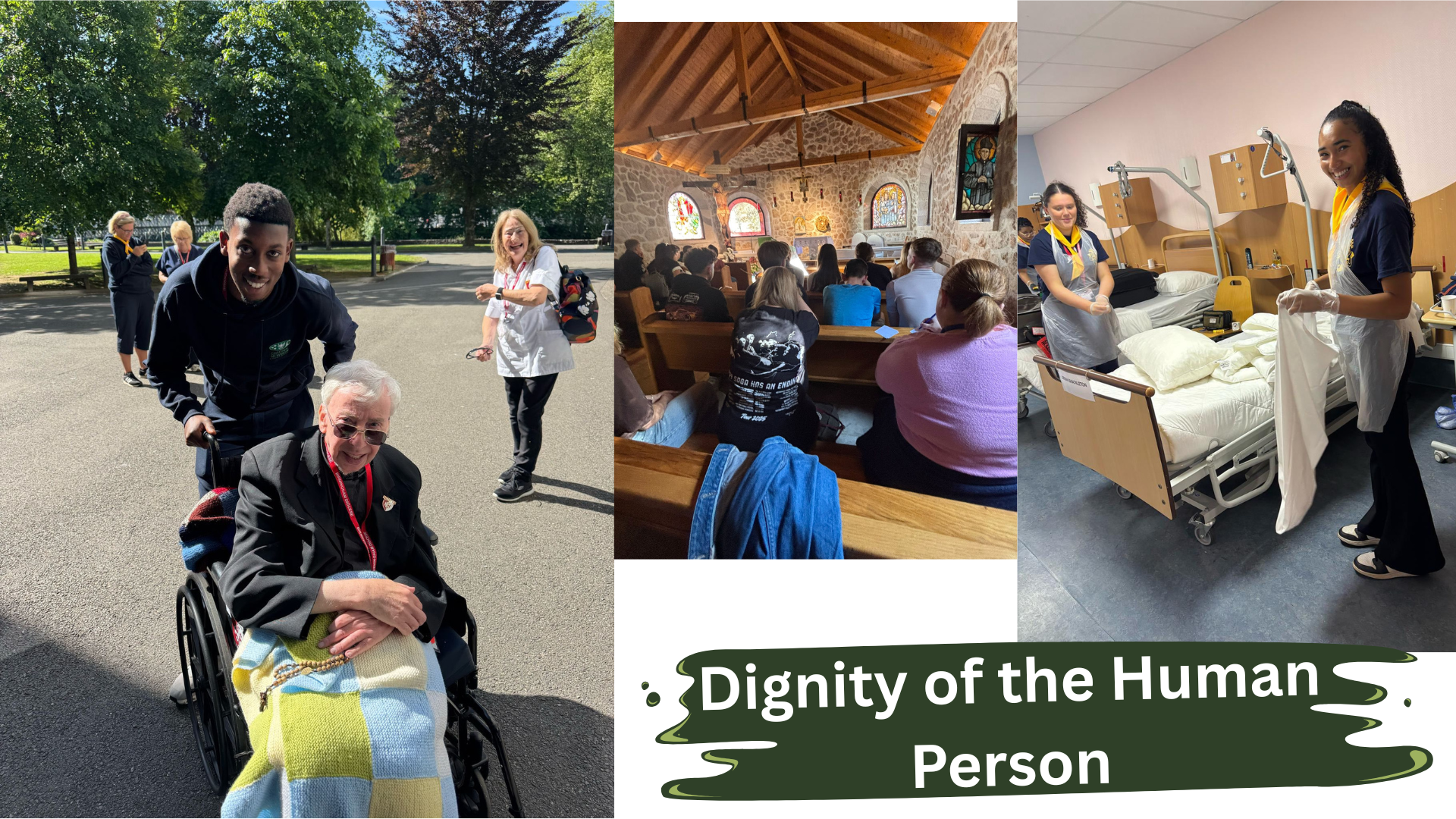
Dignity of the Human Person
Every person is created in the image and likeness of God, which means each individual has a unique, sacred worth that cannot be taken away. This dignity is not earned by achievements or status—it is God-given and must be recognised, protected, and cherished. Catholic Social Teaching reminds us that when we respect others, we honour God Himself. This principle challenges us to reject discrimination, bullying, and anything that devalues human life. It also calls us to build a school and society where every person feels safe, valued, included, and loved.
In Our School:
- We promote kindness, respect and inclusivity in all classrooms with zero tolerance on derogatory language and physical contact.
- Bullying is actively challenged through clear policies and restorative practices including working with our Chaplaincy team and Anti-bullying ambassadors to nurture a culture of inclusion.
- We celebrate diversity and teach that everyone is valued and loved by God. We do this through celebrations of cultural diversity day and through ensuring education on importance of culture is given in PSHE.
- We support students’ emotional wellbeing and provide pastoral care for all through our various pastoral support networks and incredible staff.
- We are currently working towards the school of Sancturary award reminding ourselves of our religious duty to love our neighbour.
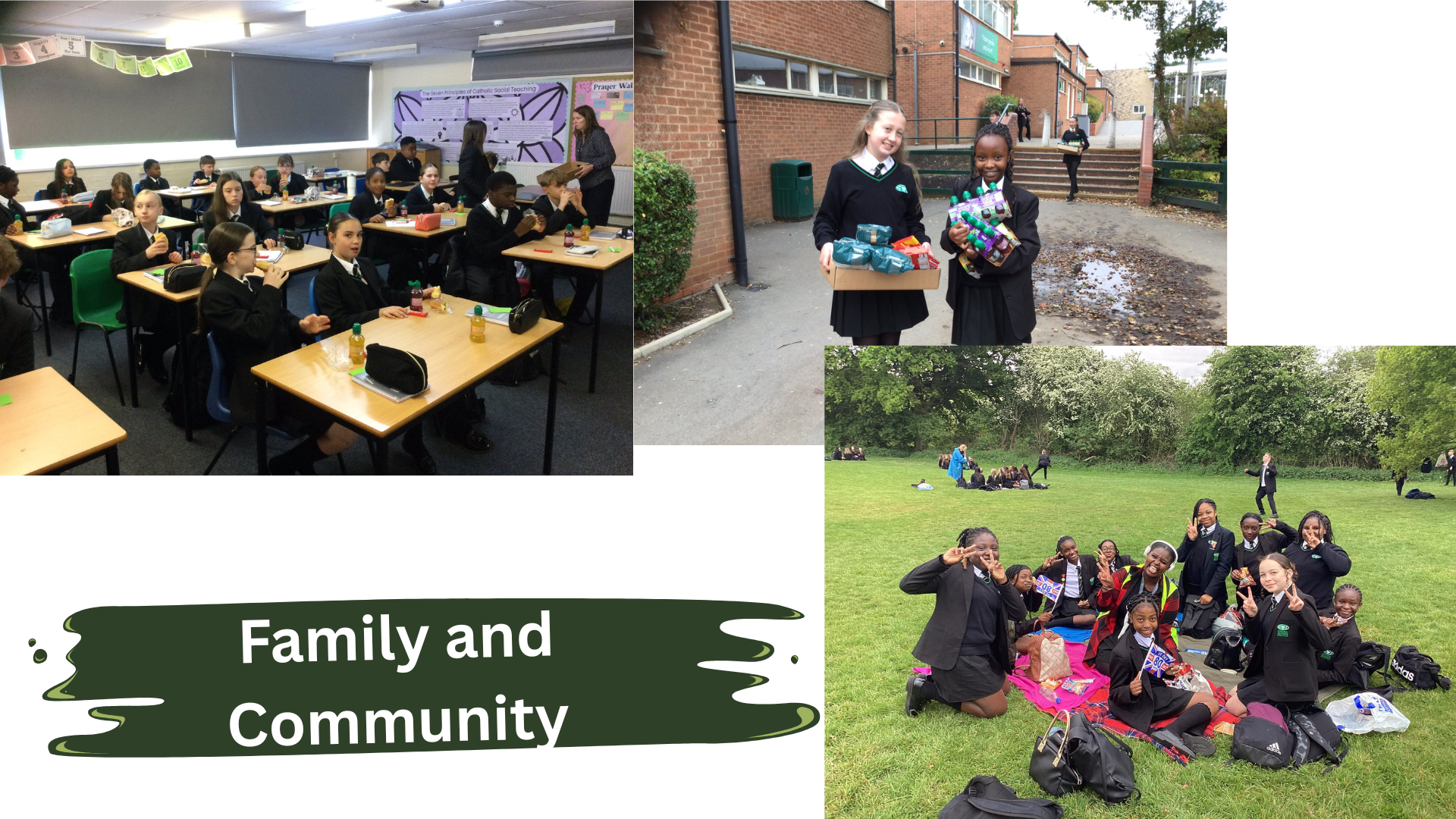
Family and Community
The family is the first place where we learn how to love, forgive, and live in faith. It is the foundation of society and the Church. Catholic teaching recognises that strong families help build strong communities, and strong communities help families flourish. We are created for relationships and are called to work together, support one another, and live as one Body of Christ. Schools play a vital role in connecting families, parish, and local community so that together we can help each person grow academically, socially, and spiritually.
In Our School:
- We involve families in liturgies, assemblies, and school events.
- We work closely with our parish and local organisations.
- We encourage teamwork, friendship, and service within our school community.
- We provide opportunities for parents to engage in their child’s learning and faith journey.
- We support families through various programs to ensure that we are a community where no one if left behind.
- We regularly work with local organisations to support in community initiatives such as visits to care homes, Litter picks and community celebrations.
Solidarity and the Common Good
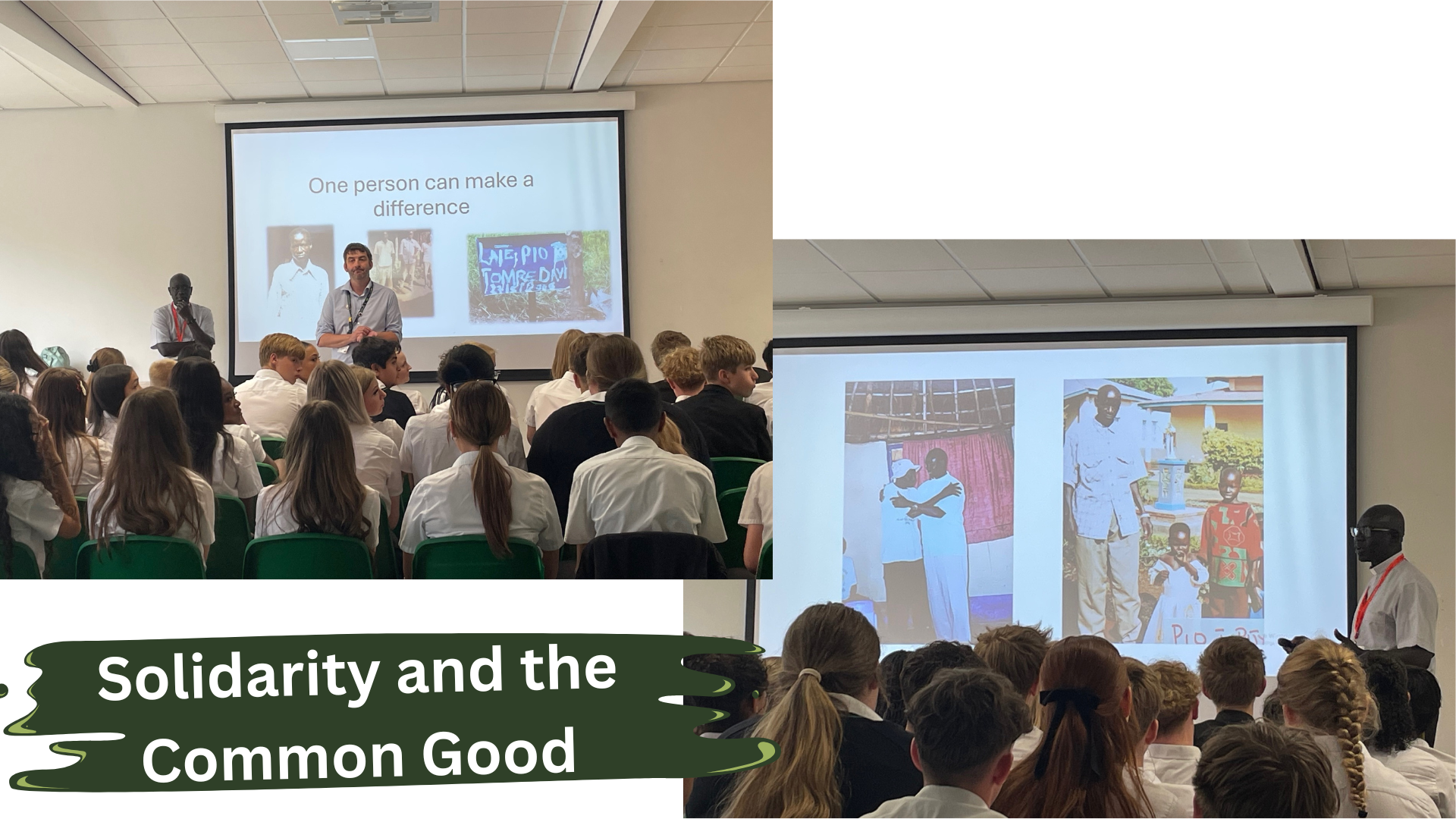
Solidarity means recognising that we are one human family and that what affects one person affects us all. It calls us to stand alongside others, especially those who suffer, and to work for justice and peace. The common good is about seeking what is best for everyone, not just ourselves or a small group. Catholic Social Teaching challenges us to put aside selfishness and instead build communities where each person’s needs are considered. When we act in solidarity, we reflect God's love for the world and bring unity where there is division.
In Our School:
- We support charities and global initiatives such as CAFOD and Fr Hudsons Caritas.
- We teach students about global issues and encourage empathy and action through our Catholic Life pastoral sessions and assemblies.
- We promote teamwork over competition and celebrate shared success.
- We pray for and stand alongside those facing hardship locally and globally.
- We have been an ICON School (International Cross of Nails) since 2019 meaning that we work actively to promote Peace and Justice in our community.
Option for the Poor and Venerable
Jesus showed special care for the poor, the sick, and the outcast. Catholic Social Teaching follows His example by calling us to put the needs of the most vulnerable first. This principle is not only about charity, but also about challenging the root causes of injustice and inequality. It reminds us that a society is judged by how it treats its most fragile members. When we prioritise the poor, we act with compassion, promote fairness, and help build a world where everyone has the chance to live with dignity.
In Our School:
- We organise food bank collections and Fundraisers.
- We ensure all students have equal access to opportunities, support, and resources.
- We raise awareness of poverty and injustice through curriculum and assemblies.
- We encourage students to serve others through acts of kindness and fundraising.
Rights and Responsibilities
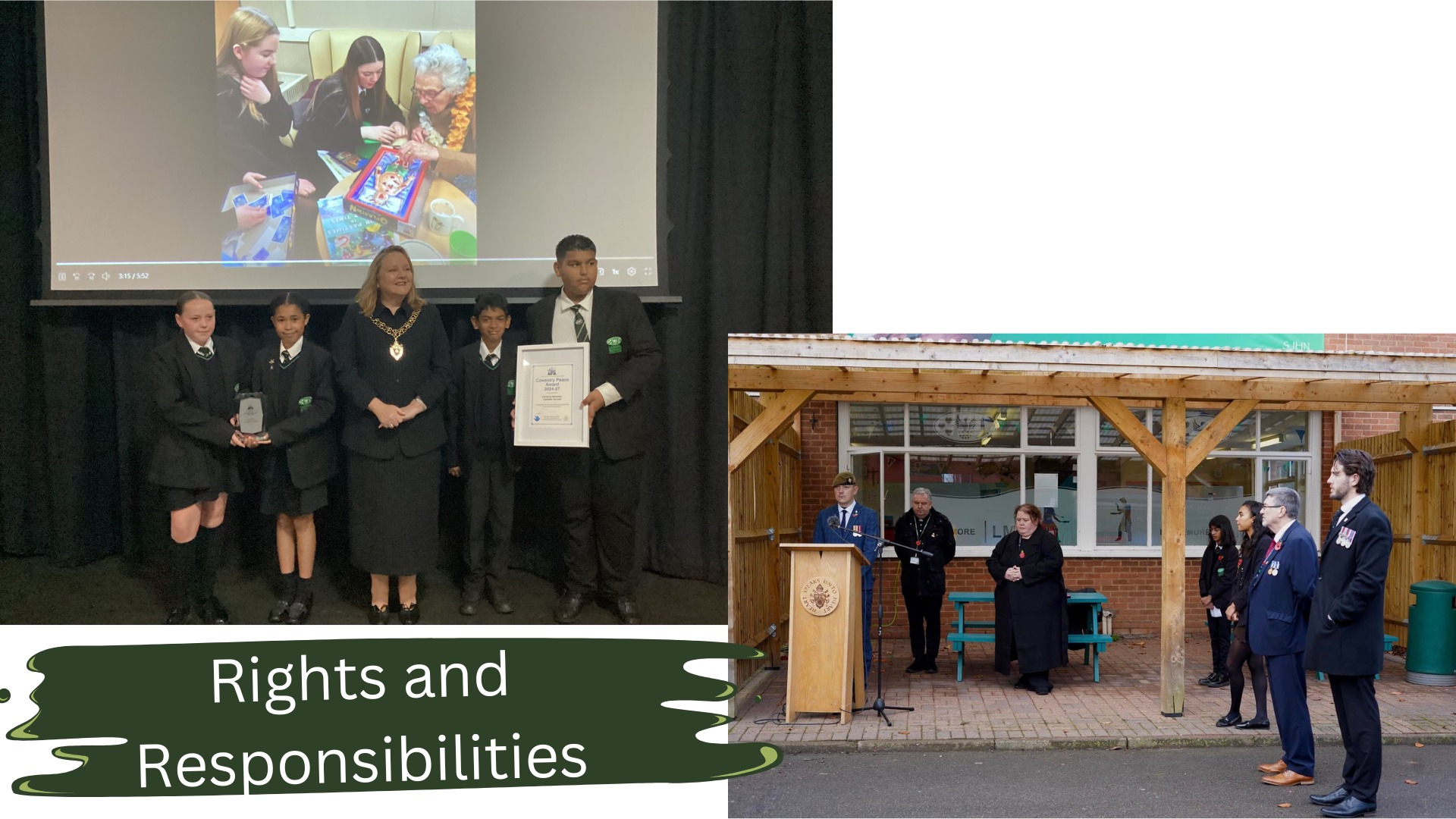
Every human being has basic rights that must be protected—such as the right to life, food, education, safety, and freedom. But with rights also come responsibilities: to respect the rights of others, to contribute to the wellbeing of the community, and to make choices that promote justice. Catholic Social Teaching encourages us to balance personal freedom with care for the common good. When we uphold both rights and responsibilities, we create a school and society built on fairness, respect, and moral integrity.
In Our School:
- We teach students about justice, fairness, and moral responsibility.
- Our school’s student leadership program gives pupils a voice and promotes active citizenship.
- We create a safe and supportive environment where everyone is heard and respected.
- We encourage students to care for others and stand up for what is right through inviting them to become Antibullying Ambassadors, Students leadership roles, Tutor Responsibility roles and many more opportunities for students to take on responsibility in their community.
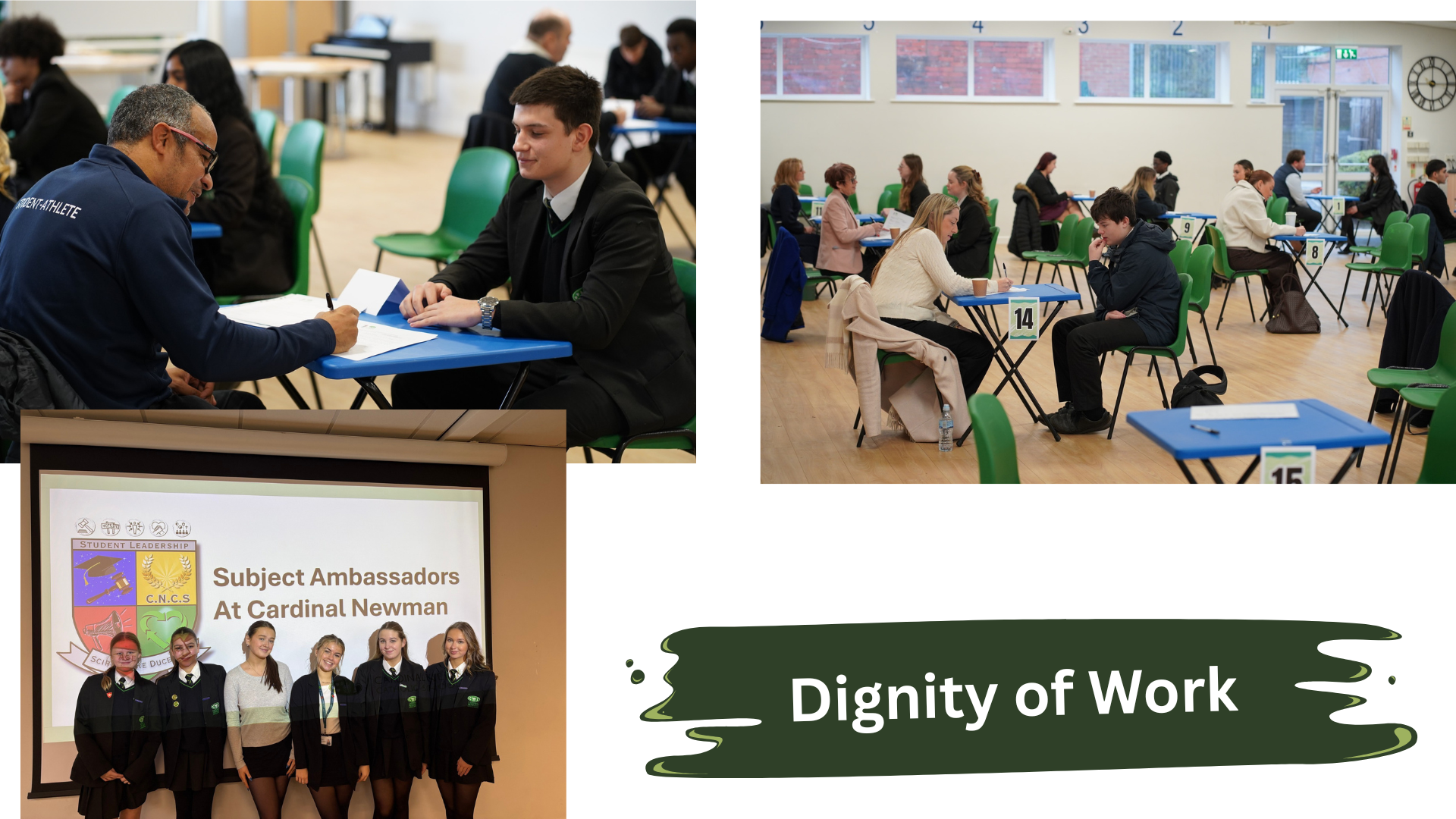
The Dignity of Work
Work is a way in which we use our God-given talents to participate in God’s creation. It is not just about earning money, but about purpose, contribution, and fulfilment. Catholic teaching says that the worker is more important than the work itself. This means all forms of work deserve respect, and every worker deserves fair treatment, safe conditions, and recognition. When we view work with dignity, we help people to grow, serve others, and discover their vocation—whether they are students, staff, parents, or members of the wider community.
In Our School:
- We celebrate different careers and the value of each person’s contribution.
- Staff are treated with fairness and respect as role models to students.
- Students are encouraged to work hard and use their talents to serve others.
- We teach that success is not just about achievement, but about effort, purpose, and integrity.
- We provide specialist advice and support in career planning, and have regular event where students can discern and learn their vocation.
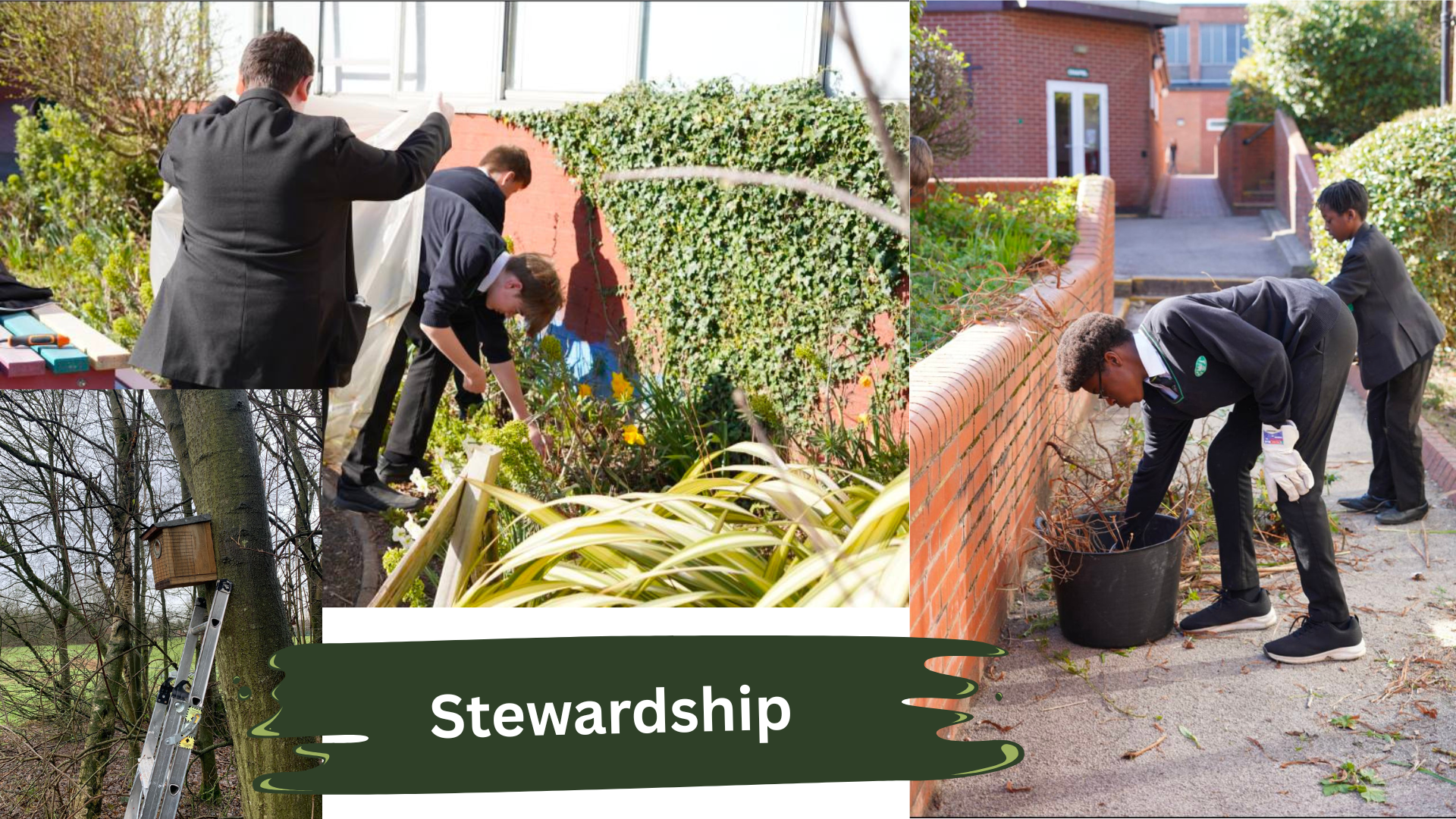
Stewardship
God created the Earth and entrusted it to us to care for, not to use selfishly. Stewardship means protecting the environment, respecting all living things, and using resources responsibly so that future generations can thrive. Caring for creation is not just an environmental issue—it is a moral and spiritual one. It reflects our gratitude to God and our responsibility towards one another. Catholic Social Teaching calls us to be guardians of the Earth, making choices that protect the beauty and balance of God’s world.
In Our School:
- We recycle, reduce waste, and encourage environmentally friendly habits.
- We look after our school grounds and create green spaces for wildlife.
- Eco-councils or student groups lead sustainability projects.
- We teach students about climate change and our responsibility to protect the Earth in both Curriculum and Pastoral sessions.
- We have a designated sustainability lead working with the Mac to reduce the carbon footprint of our school and to raise awareness of ongoing topics.